- আরও
জাগো কণ্ঠ ডেস্ক ১০ মে ২০২৬ , ২:০২ অপরাহ্ণ
NSTU Correspondent, Mahtab Chowdhury:
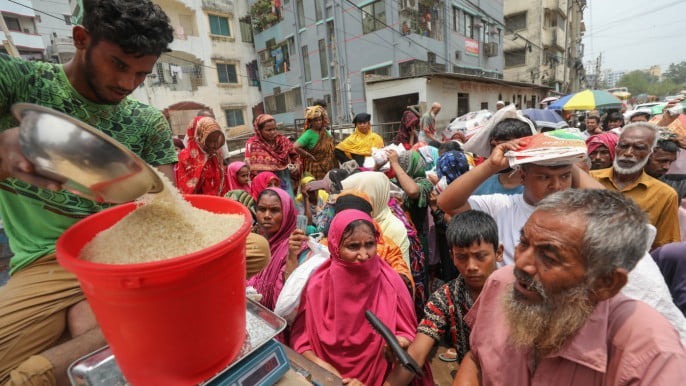
According to the UNDP Development Report 2016, Bangladesh was ranked 139th among 187 countries. Like other developing countries, Bangladesh has been struggling for a long time to reduce the incidence of poverty and improve the living standards of its millions of impoverished citizens. Bangladesh has achieved remarkable progress in poverty alleviation during the last few decades as a result of the combined efforts of both the government and non-government sectors. According to the Household Income and Expenditure Survey 2016, the poverty rate in Bangladesh was 24.3% in 2016, whereas it was 56.7% in 1991. Though the poverty rate has declined over the years, still one-fourth of the population of BD lives below the poverty line, and almost half of them live in extreme poverty. Thus, the government has continued the SSNP (Social Safety Net Programme) in order to alleviate poverty through the improvement of the socio-economic condition of the ultra-poor. In order to bring effectiveness and efficiency to SSNPs, Bangladesh has formulated the NSSS (National Social Security Strategy).
The government, along with a number of NGOs (Non-Government Organizations), operates poverty reduction programmes by providing microcredit, training to unemployed people, skill-based programmes, and other income-generating activities for unemployed youths. The government mainly operates Social Safety Net Programmes (SSNPs) to eradicate poverty in BD through policy-making, planning, and execution. The main goals of these programmes are alleviating poverty in the country through improving living conditions, ensuring food security, eradicating unemployment, maintaining equality, empowering women, ensuring education for all, and improving disaster management. The major social safety net programmes may be divided into social protection and social empowerment programmes.
The social protection programmes include:
i) Cash Transfers: Allowances for the elderly, freedom fighters, divorced and widowed women, persons with disabilities, female education stipends, etc.
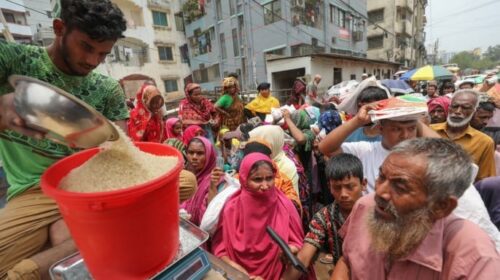
ii) In-kind Transfers: Food-based programmes, nutrition programmes, relief programmes, etc.
iii) Job-generating Programmes: Seasonal employment, support for agricultural production, and engaging unemployed or vulnerable people in government projects such as construction work.
On the other hand, social empowerment programmes include:
i) Microcredit: Savings, loans, and insurance facilities for poor households neglected by banks.
ii) Other SSN Programmes: Subsidies for electricity, food, fertilizers, and support for marginal farmers, etc.
Along with these programmes, other factors contributing to poverty reduction in BD include the RMG (Ready-Made Garments) sector and remittances. The RMG sector has created about 4.2 million employment opportunities, in which women’s participation is around 58%, thereby enhancing women’s empowerment. Almost 10 million Bangladeshis work abroad and send a huge amount of remittances to BD, which increases the GDP of the country. The RMG sector and remittances have had a great impact on alleviating poverty throughout the country over the decades. All these programmes are contributing to reducing poverty levels and improving the economic growth of the country.
However, these SSNPs are not being implemented properly, and as a result, BD has not been able to escape from the curse of poverty completely. Some key barriers to effective poverty reduction are: mistargeting of beneficiaries, corruption and nepotism, leakage of resources, weak monitoring systems, limited coverage, faulty programme design, lack of preparation in programme implementation, ineffective targeting, a flat rate of funding for all regions, disparities in regional distribution, and weak accountability measures. The arbitrary selection of poor people is often faulty and flawed. Findings revealed in the Sixth Five Year Plan (SFYP) suggest that 27% of VGD beneficiaries are actually non-poor. Another study conducted by the Bangladesh Institute of Development Studies (BIDS) demonstrated that nearly 47% of the beneficiaries of the PESP (Primary Education Stipend Programme) are non-poor. Likewise, a qualitative study demonstrated that many solvent people receive VGD cards through direct contact with Union Parishad chairmen and members, while actual poor people are left behind.
There are allegations against local political leaders that they either practice nepotism or demand illegal payments from poor people in exchange for employment opportunities. As a result, the actual poor people who are not in the good books of local leaders or who cannot provide undue money are excluded from receiving programme benefits. Another report published against Union Parishad members stated that they unlawfully include fake names, relatives’ names, or the names of their preferred people in beneficiary lists and take advantage of those names. In many cases, extremely poor people are harassed by ruling party leaders. A study conducted by the Bangladesh government in 2019 demonstrated that 29.6% of respondents believed that some poor people were deprived of benefits because of political considerations, 14.8% argued that they were deprived due to nepotism, and 21.4% were dissatisfied even after receiving benefits. Therefore, more than 60% of eligible households are yet to receive benefits from suitable SSN programmes.
However, to win the battle against poverty, six accurate measures have been adopted:
i) Accurate implementation of objectives
ii) Accurate arrangement of projects
iii) Accurate use of funds
iv) Accurate implementation of support measures
v) Accurate assignment of persons in charge
vi) Accurate evaluation of poverty reduction outcomes
Along with these measures, the government must ensure corruption-free SSN programmes, take necessary steps to reduce the poverty gap between rural and urban areas, properly target vulnerable and needy people, maintain proper follow-up and monitoring systems, and design effective long-term poverty reduction plans. Not only that, alongside SSN programmes, poverty alleviation is also possible through developing an educated workforce, creating skilled citizens, ensuring quality healthcare for all, generating employment opportunities, taking proper measures to reduce unemployment, improving disaster management, ensuring citizen services, providing special facilities to backward, remote, and inaccessible areas, modernizing the garments sector and other industries, and taking initiatives to increase overseas employment opportunities.
n/s/t